
Assessment & charting
We examine the gums and teeth, record bleeding and pocket depths, review risk factors and use suitable X-rays when clinically needed.
Apex Dental & Implant Centre
Gum treatment in Lucknow
Gum disease often begins when plaque collects around the gumline, causing redness, swelling or bleeding. If inflammation continues, pockets can deepen and the tissues and bone supporting the teeth may be affected. Your gum-care plan begins with an examination of the gums and teeth, pocket measurements, an assessment of plaque and calculus, and suitable X-rays when needed. Early care may focus on personalised cleaning guidance and professional plaque removal. Deeper pockets may require scaling and root surface debridement below the gumline, sometimes over more than one visit. Advanced problems can need specialist or surgical care. Long-term results depend on daily plaque control, review appointments and a maintenance schedule matched to your needs.
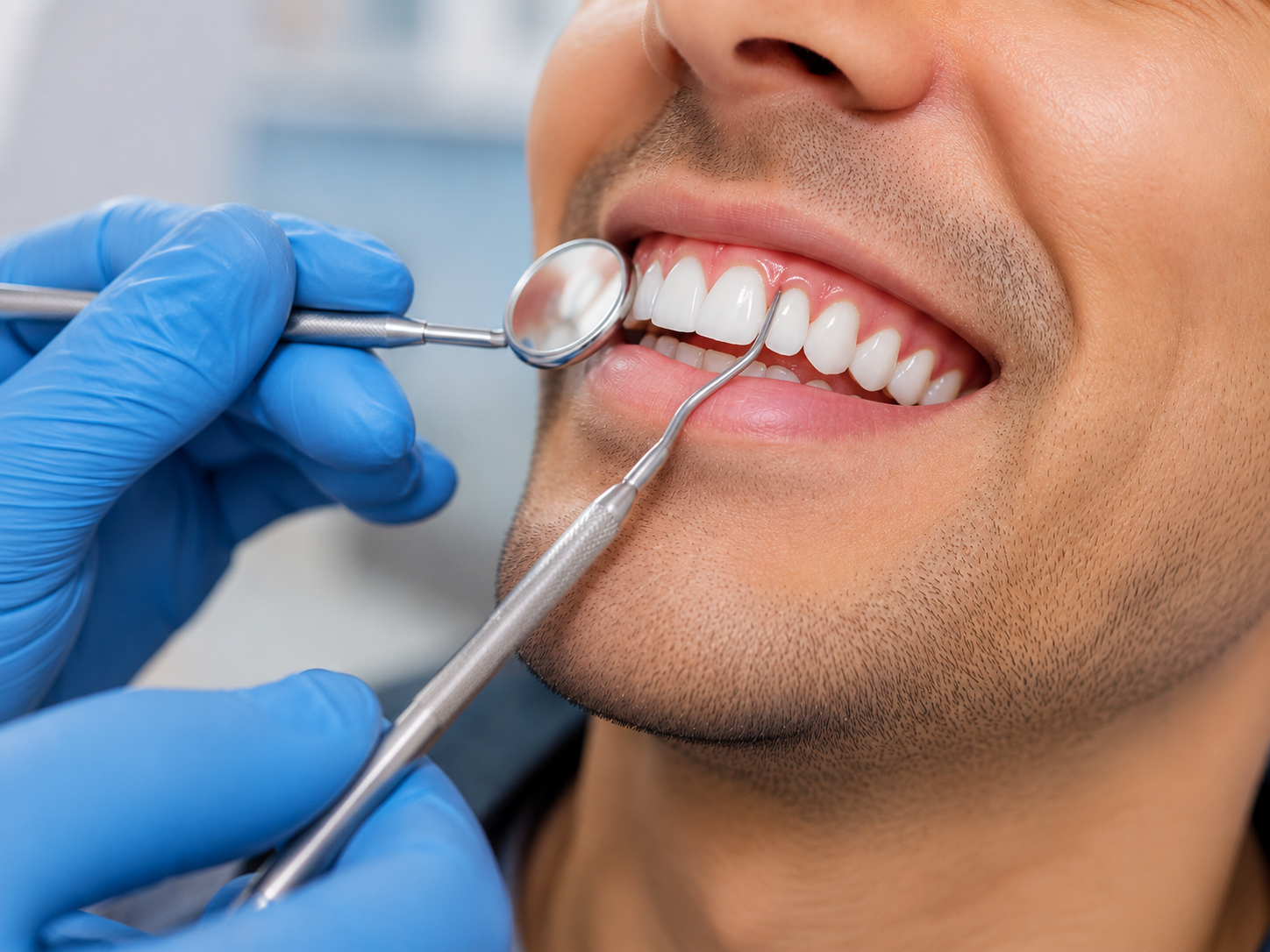
Gum measurements, tooth stability, plaque levels and suitable imaging guide the treatment depth.
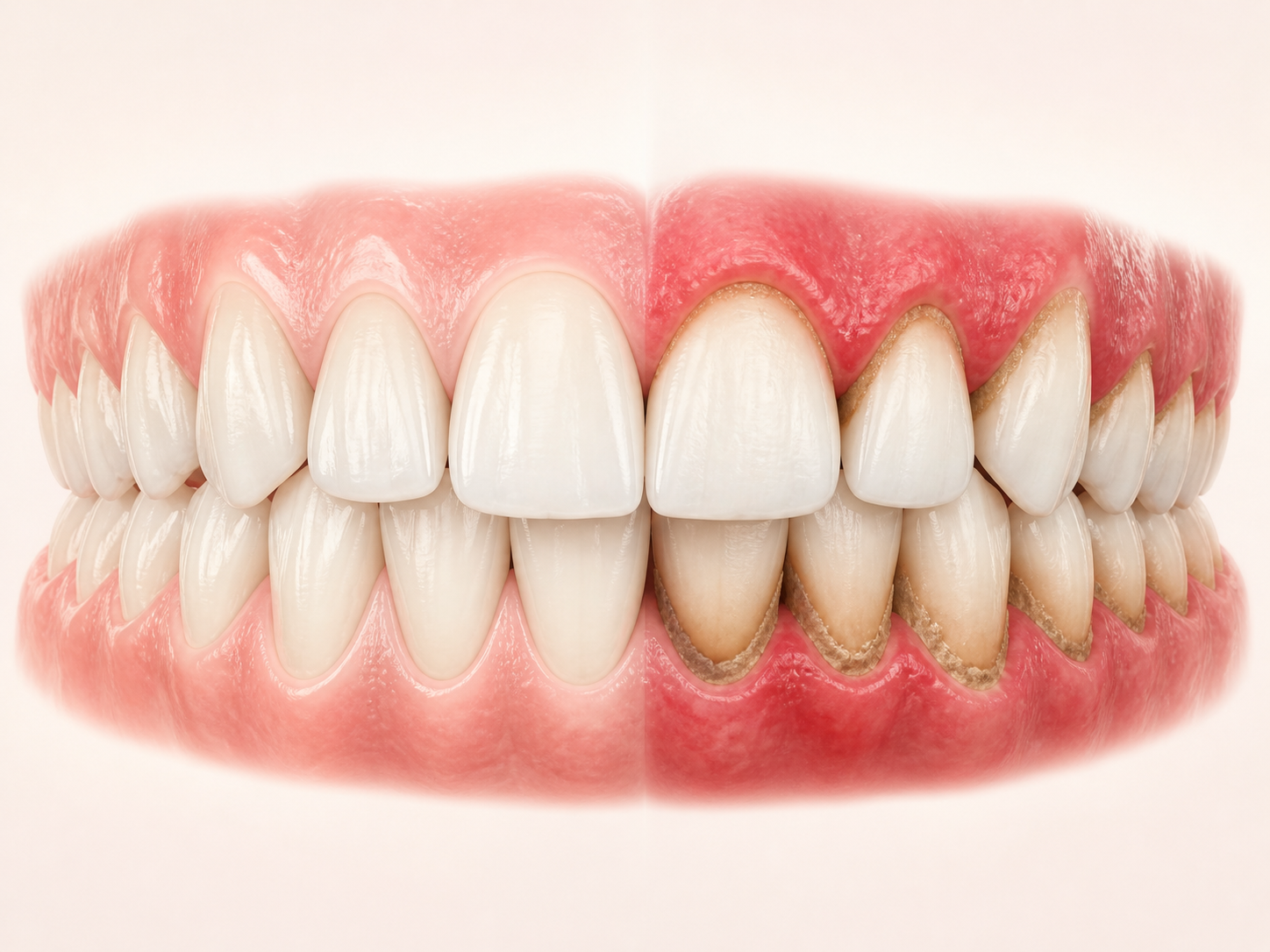
Dental plaque is a bacterial film that builds up on teeth. When it is not removed consistently, it can irritate the gums; hardened plaque, called calculus or tartar, requires professional removal.
Early inflammation is called gingivitis and commonly causes red, swollen or bleeding gums. With effective daily cleaning and suitable professional care, early inflammation can often improve.
Periodontitis is a deeper problem in which gum pockets and supporting tissues are affected. It may be associated with recession, persistent bad breath, tenderness, changes in the bite or loose teeth, although some people notice few symptoms.
Treatment is matched to the findings. It can range from cleaning instruction and professional plaque removal to scaling and root surface debridement below the gumline, followed by reassessment and an individual maintenance plan.
The number and type of visits depend on inflammation, pocket depth, calculus levels, bone support, healing response and your daily cleaning routine.
We examine the gums and teeth, record bleeding and pocket depths, review risk factors and use suitable X-rays when clinically needed.
Your brushing and interdental routine is tailored to the areas that retain plaque, alongside suitable professional cleaning.
Where pockets are deeper, plaque and calculus are removed from below the gumline and root surfaces according to the treatment plan.
Healing and pocket response are reassessed, then a personalised recall and maintenance interval is planned to protect the result.
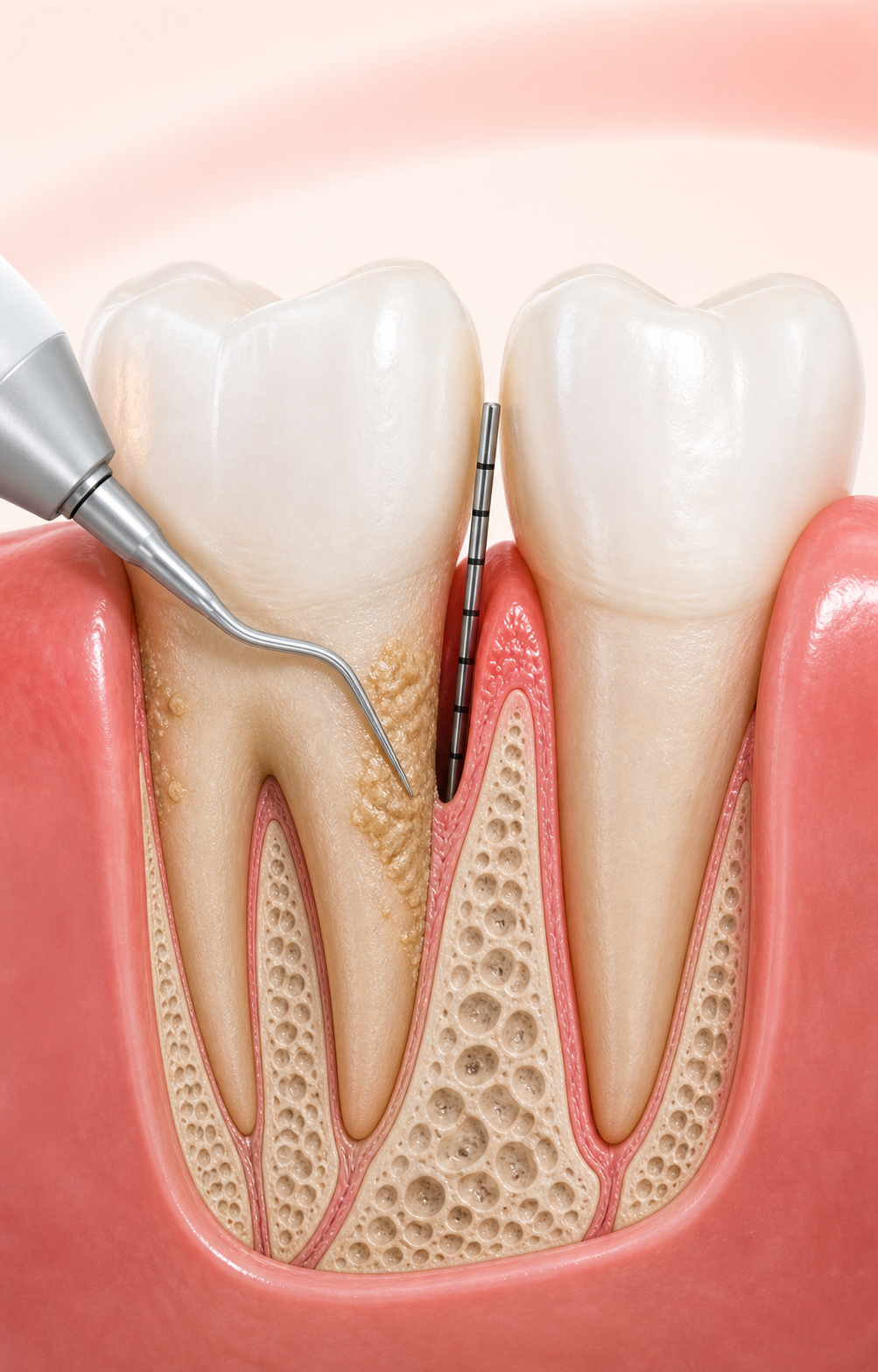
Gum treatment is not one-size-fits-all. Bleeding, pocket measurements, plaque and calculus deposits, gum recession, tooth mobility and bone levels help show whether care should focus on early inflammation or more established periodontal disease.
Your medical history and habits also matter. Diabetes, tobacco use, some medicines and the ability to clean effectively can influence gum health, healing and the maintenance interval recommended after active treatment.
Opening WhatsApp to complete your request.