
Assessment & diagnosis
We review your symptoms, examine the tooth and use suitable X-rays or tests to assess the pulp, roots and surrounding tissues.
Apex Dental & Implant Centre
Root canal treatment in Lucknow
Root canal treatment may be recommended when the pulp inside a tooth becomes inflamed or infected because of deep decay, a crack, trauma or previous dental work. The procedure removes the affected tissue, then cleans, shapes, disinfects and seals the canal system. Local anaesthesia is normally used to keep the area comfortable during treatment. Depending on the tooth and the extent of infection, care may take one or more visits. A final filling, onlay or crown may then be advised to restore strength and provide a durable seal. Every plan begins with an examination and suitable X-rays to confirm the diagnosis, assess whether the tooth can be restored and discuss alternatives.
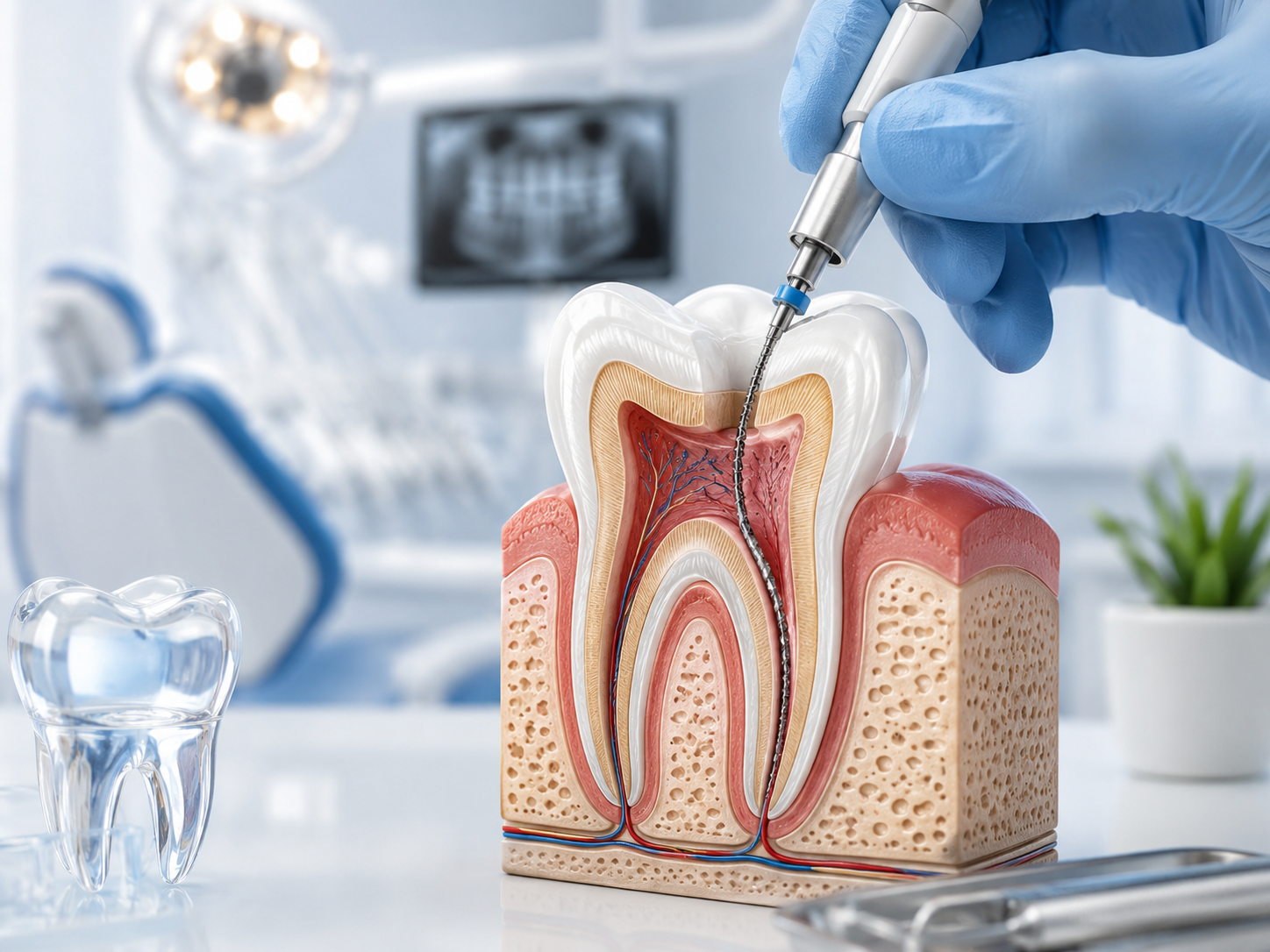
Symptoms, tooth structure, roots and surrounding bone are assessed before treatment is recommended.
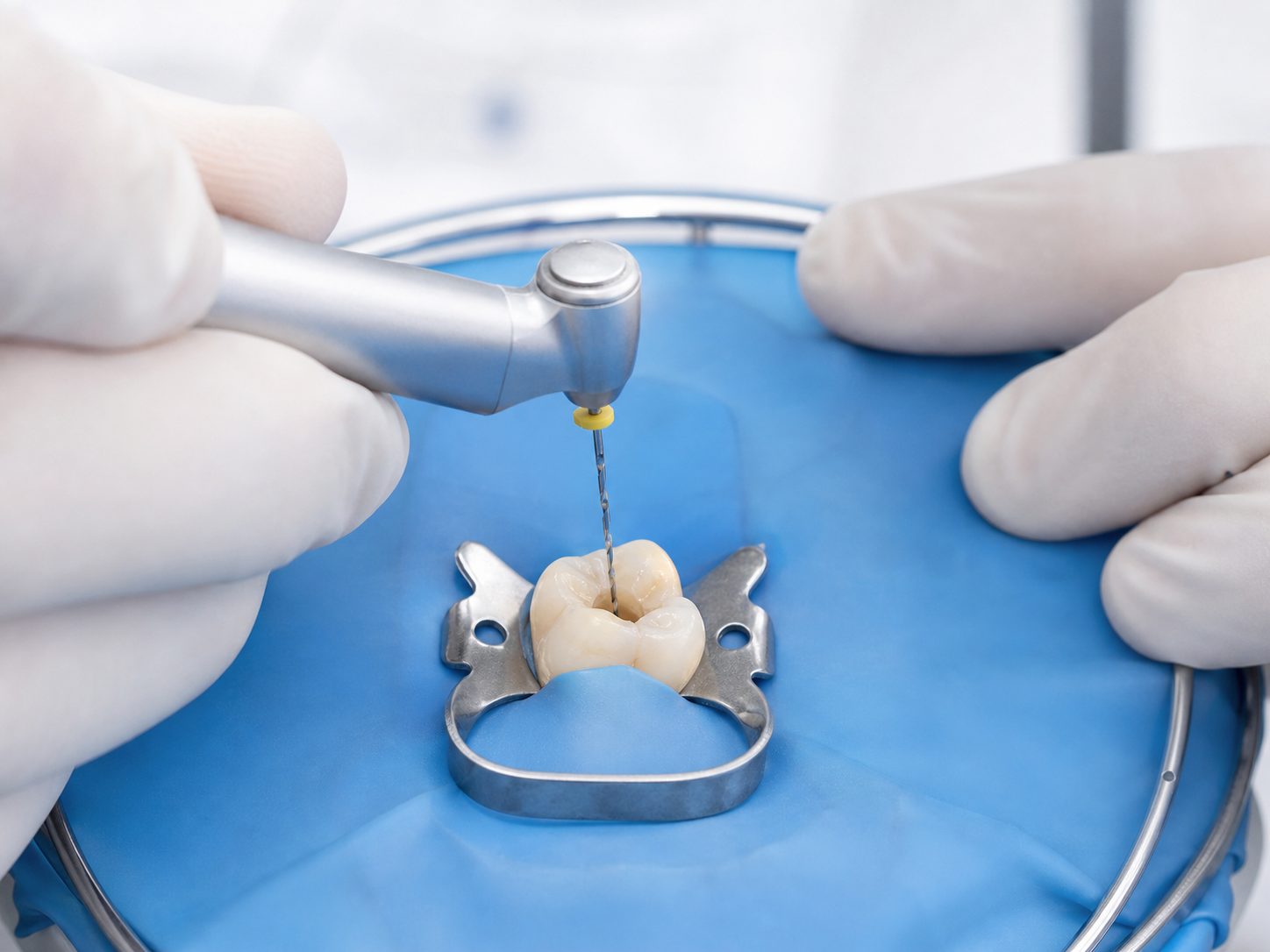
Beneath the enamel and dentine is soft tissue called the pulp, which contains nerves and blood vessels. When this tissue becomes irreversibly inflamed or infected, treatment may be needed to manage the source and retain the tooth when it is suitable to restore.
During root canal treatment, an opening is made in the tooth and the affected pulp is removed. The narrow canals are carefully shaped, disinfected and filled before the access opening is sealed.
Persistent pain when biting, lingering sensitivity, swelling, tenderness, a gum spot or a darkened tooth can require assessment. Some affected teeth cause few obvious symptoms, which is why clinical tests and suitable X-rays are important.
The final restoration is part of the treatment plan. Depending on how much sound tooth remains and the biting forces involved, a filling, onlay or crown may be recommended to protect the treated tooth and create an effective seal.
The exact number of visits depends on the tooth, its canal anatomy, infection and the restoration required after treatment.
We review your symptoms, examine the tooth and use suitable X-rays or tests to assess the pulp, roots and surrounding tissues.
The tooth is numbed and isolated to keep the treatment area clean and reduce contamination from saliva.
The affected pulp is removed and the canals are shaped, disinfected, filled and sealed according to the clinical plan.
A suitable filling, onlay or crown is planned to restore function, protect remaining tooth structure and complete the seal.
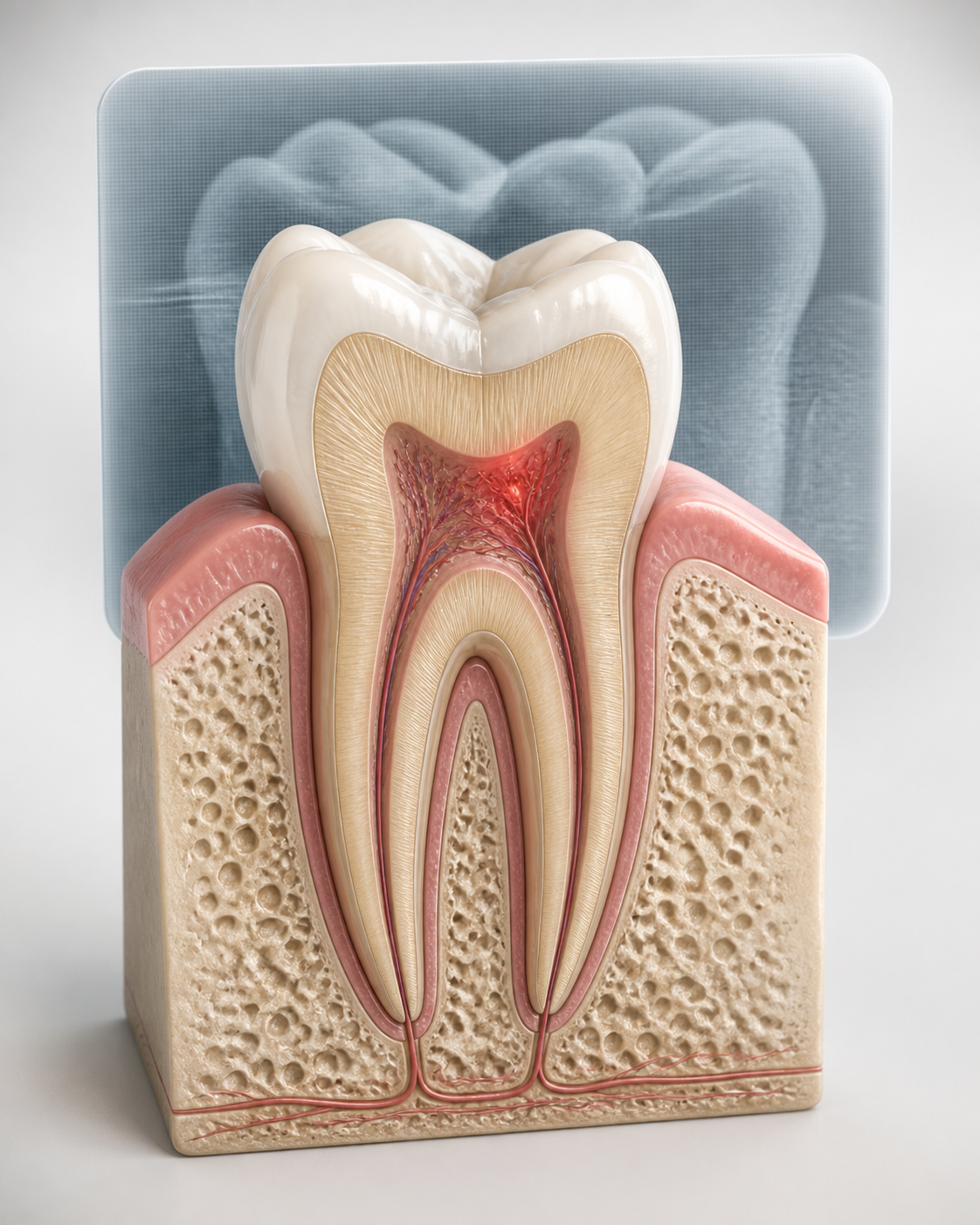
Before recommending root canal treatment, your dentist assesses whether the tooth can be predictably cleaned, sealed and restored. Symptoms alone do not show the full condition of the pulp, roots, surrounding bone or remaining tooth structure.
Clinical tests and suitable imaging help identify the source of pain and whether root canal treatment, another dental procedure or extraction should be considered. The findings, limitations, alternatives and likely restoration are discussed before you decide.
Opening WhatsApp to complete your request.